Common mistakes
For many companies, B2B data is the basis for outbound, CRM, marketing automation and sales. At the same time, the topic of "data enrichment" is often treated too simply. Many companies purchase large data packages or enrich all contacts across the board without first clearly defining which information is really relevant to the business. This often results in unnecessarily high costs, poor data quality and ultimately inefficient processes.
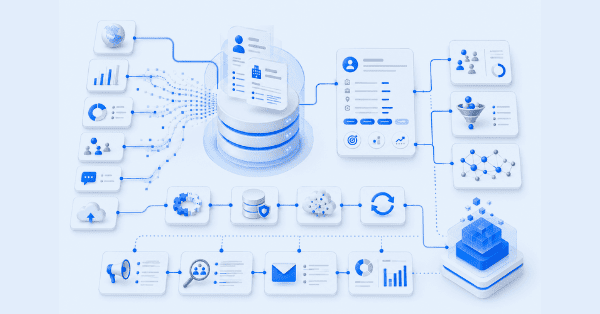
B2B data enrichment is essentially about enriching existing contact or company data with additional information. This can be traditional company data such as industry, number of employees or turnover, but also much more strategic information such as purchase intentions, tech stacks, interests or interaction signals.
It is important to note that not every field is automatically valuable. Enrichment can quickly become expensive, especially with large amounts of data. Many providers charge per enriched data set, per contact or per export. Therefore, the question should always be asked first: Which data really helps us to make better decisions or campaigns?
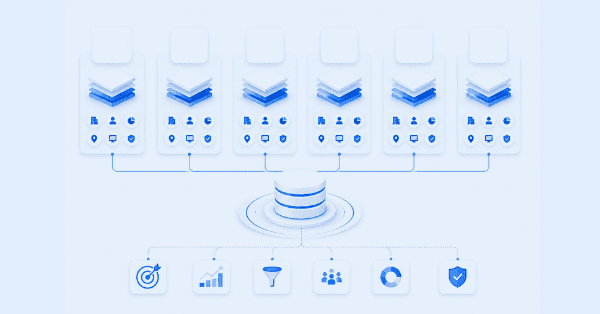
A common mistake, for example, is the "full enrichment" of all contacts in the CRM. In practice, dozens of fields are then added that are never used later. A clear, use-case-based approach makes more sense. For example, a company that operates targeted outbound may need different data points than a company that primarily works with newsletter segmentation or marketing automation.
Types of enrichment
The following information may be particularly relevant for outbound campaigns:
- Position and seniority
- Company size
- Industry
- location
- Technologies used
- Growth indicators
In email marketing or CRM, on the other hand, other data is often more valuable:
- interest clusters
- visited landing pages
- Newsletter buttons clicked
- downloaded content
- webinar participations
- activity level
- last interaction
This is where data enrichment becomes particularly exciting. Because data enrichment doesn't just mean buying external data. Many companies already have extremely valuable data internally - but they do not use it in a properly structured way.
For example, if a contact clicks multiple times on content relating to HubSpot migration, CRM workflows or Google Ads reporting, this is a strong intent signal. This signal can be stored in the CRM and used later for segmentation, lead scoring or automated sales processes:
- Newsletter clicks
- Website behavior
- Downloaded PDFs
- Webinar topics
- product interests
These internal signals are often much more valuable than generic external company data because they show concrete interest and actual behavior.
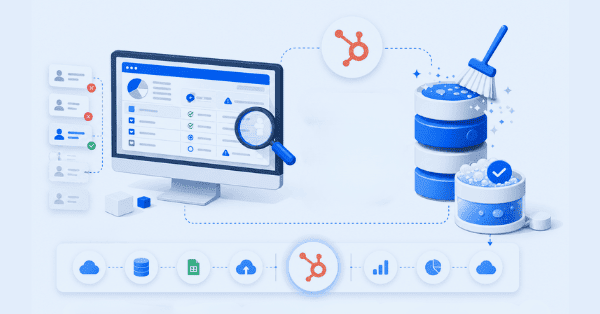
Technically, this can be mappedusing CRM systems such as HubSpot, tracking tools or marketing automation workflows. Especially in combination with clean tracking, a very valuable database is created in the long term. A strong marketing automation agency can help you implement these processes.
Apollo.io vs. Cognism vs. ZoomInfo - what are the differences?
There are now numerous providers in the B2B data enrichment sector. The best-known platforms are currently Apollo.io, Cognism and ZoomInfo.
Apollo.io
Apollo.io has a particularly strong price-performance ratio and is therefore frequently used by start-ups, smaller sales teams and data-driven outbound. The platform combines database, sequences, contact enrichment and outreach functions in one system at a relatively low price.
Advantages
- Comparatively inexpensive entry
- Large contact database
- good combination of data + outreach
- Strong automation options
- API and CRM integrations
Disadvantages:
- Data quality in Europe sometimes fluctuates
- Data protection issues relevant depending on area of application
- Telephone numbers not always reliable
- Sometimes higher bounce rates than premium providers - ZeroBounce would be necessary/helpful here
Companies with a strong focus on Europe in particular should therefore check how clean and GDPR-compliant certain processes actually are.
Cognism
Cognism is positioning itself much more strongly on the European market and emphasizes GDPR compliance and data quality in particular. Many larger European companies prefer Cognism for precisely this reason.
Advantages:
- Strong European coverage
- Focus on GDPR compliance
- Good mobile number quality
- Often better data quality in the DACH region
Disadvantages:
- Significantly more expensive
- Less "all-in-one" than Apollo
- Higher barriers to entry
Cognism can therefore make more sense than cheaper alternatives, especially in the enterprise sector or in sensitive markets.
ZoomInfo
ZoomInfo is extremely strong in the US market in particular and is one of the largest data providers worldwide.
Advantages
- huge database
- strong US coverage
- extensive company data
- many additional modules (Intent, Org Charts, Technographics)
Disadvantages:
- very expensive
- Europe partly weaker than US
- Complex pricing
- Not always ideal for smaller teams
ZoomInfo can be very powerful for international enterprise structures. For many medium-sized companies in Europe, however, the cost-benefit factor is often difficult.
Data enrichment is not an end in itself
Many companies focus too much on as much data as possible rather than on the right data. Ultimately, it's not about having hundreds of fields in the CRM. The decisive factor is which information is actually used.
A good enrichment concept therefore first answers the following questions:
- Which segments do we want to create?
- Which signals show real buying interest or whatever is important to you?
- What information really helps sales?
- Which data improves newsletters or automation?
- Which fields are actually actively used?
Companies that have thought through these questions properly usually build much more valuable CRM systems in the long term than companies that simply buy in as much data as possible. If you need support with this process, please arrange a free consultation.