
How Often Should You Clean Your CRM Data?
By Heinz Klemann on Sep 30, 2026, 8:30:00 AM
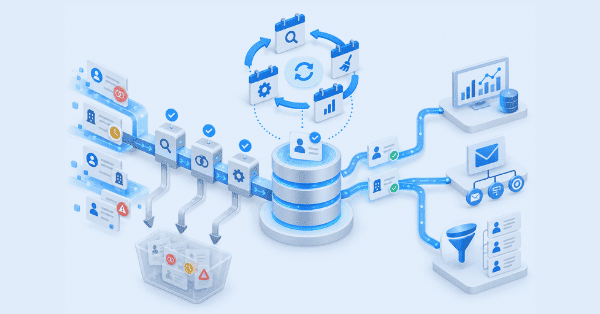
The question of how often CRM data should be cleaned cannot be answered with a tool or checklist alone. The best results come from combining reliable data, clear processes, suitable technology, and clearly defined responsibilities. This guide explains what matters, how to approach CRM data cleanup, and how to avoid common mistakes.
image
The short answer: Monitor business-critical CRM data continuously, perform smaller cleanup activities every month, and schedule a more comprehensive review at least once per quarter.
Companies with large data volumes or highly automated processes may require weekly checks. For a smaller database with only a few data sources, quarterly reviews and one annual deep cleanup may be sufficient.
When Should You Clean Your CRM Data?
A fixed schedule is only part of the solution. Certain events should also trigger a review of your CRM data.
These include:
- an upcoming CRM migration
- a major marketing campaign
- a redesign of your lead-scoring model
- changes to sales territories or responsibilities
- the introduction of a new integration
- the implementation of a new reporting system
A sudden increase in undeliverable emails, unassigned records, newly created duplicates, or missing lifecycle stages also justifies an immediate review.
A Practical CRM Data Maintenance Schedule
Daily or weekly automations can identify invalid formats and obvious duplicates.
During monthly reviews, you should pay particular attention to the quality of new data, undeliverable emails, unassigned records, and general trends in data quality and data volume.
Quarterly audits should also examine taxonomies, lifecycle logic, outdated records, integrations, and recurring duplicate patterns.
During an annual review, you can reassess your data retention rules, data sources, and overall CRM data model.
Adapt the Frequency to the Risk
The higher the risk of inaccurate or outdated data, the more frequently you should review and clean your CRM. This is typically the case when the number of records is growing quickly or numerous data imports are being performed.
Lower-risk CRM systems—for example, systems in which fewer users work with or edit the data—can be reviewed at longer intervals. Nevertheless, leading indicators should still be monitored continuously.
How to Know Whether Your Cleanup Schedule Is Working
Simply put, your cleanup schedule is working when the actual duplicate rate decreases, fewer new duplicates are created, and the number of data gaps or incomplete fields declines. This can be measured, for example, by tracking the record completeness rate. A decreasing bounce rate can also be a useful indicator of improved data quality.
If these metrics deteriorate significantly between two cleanup cycles, you should shorten the intervals or address the problem directly at the relevant data source.
Practical Checklist
- Define which business decision or process the cleanup should improve.
- Analyze the current situation and establish a measurable baseline.
- Agree on definitions, responsibilities, data sources, and acceptance criteria.
- Test changes on a representative sample before scaling.
- Document transformations, exceptions, and unresolved risks.
- Measure both operational data quality and downstream business impact.
- Introduce preventive controls and a recurring review schedule.
Turn Your Data into a Reliable Foundation for Growth
BeastBI helps B2B companies connect CRM, data, marketing, and reporting in a meaningful way.
If you need support with the regular cleanup of your CRM data, we can assess your current data quality, develop a realistic roadmap, and support implementation together with your team.
Contact BeastBI to discuss your CRM project.
Frequently Asked Questions
What Is the First Step When Planning a CRM Data Cleanup?
First, define the business outcome you want to achieve. Then analyze the current state of your CRM data.
A representative sample often provides more useful insights than general assumptions about the entire database.
Can Regular CRM Data Cleanup Be Handled Internally?
Yes. This requires clear responsibilities, sufficient capacity, suitable tools, and documented quality controls.
External support is particularly useful when specialist expertise, rapid implementation, or experience with multiple interconnected systems is required.
How Can the Success of CRM Data Cleanup Be Measured?
First, establish a measurable baseline and connect data quality with specific business outcomes.
Relevant metrics may include:
- data accuracy and completeness
- number of duplicates
- time saved
- conversion rate
- email deliverability
- reporting reliability
- reduced manual effort